Now accepting new patients, no referral required  ·  Book your initial assessment today
logo
Physio Pelvic Floor Pelvic Health Clinic
Pain education

Pelvic pain is rarely one thing

Understanding the types of pelvic pain, the role of the pelvic floor muscles, and how the brain-pelvic floor axis shapes pain experience.

Types of pelvic pain

Pelvic pain is defined as pain in the lower abdomen and pelvis. It can affect all genders and ages, and may be acute or chronic, constant or intermittent.

  • Acute pelvic pain, sudden onset, usually under six months. Often linked to infections or injury.
  • Chronic pelvic pain, persists six months or longer. Frequently involves both peripheral and central nervous system contributions.
  • Cyclic pelvic pain, follows the menstrual cycle; commonly associated with endometriosis or dysmenorrhea.
  • Muscle-related pelvic pain, trigger points within pelvic floor muscles referring pain to the pelvis, lower back, hips, or inner thighs.
  • Localized pain, confined to the bladder, vestibule, rectum, or a specific pelvic structure.
  • Diffuse pain, widespread across the pelvic region, harder to localize, often involving an over-sensitised nervous system.

How pelvic floor dysfunction causes or worsens pain

The pelvic floor can be the primary pain generator or a contributor that amplifies other conditions. Key mechanisms include:
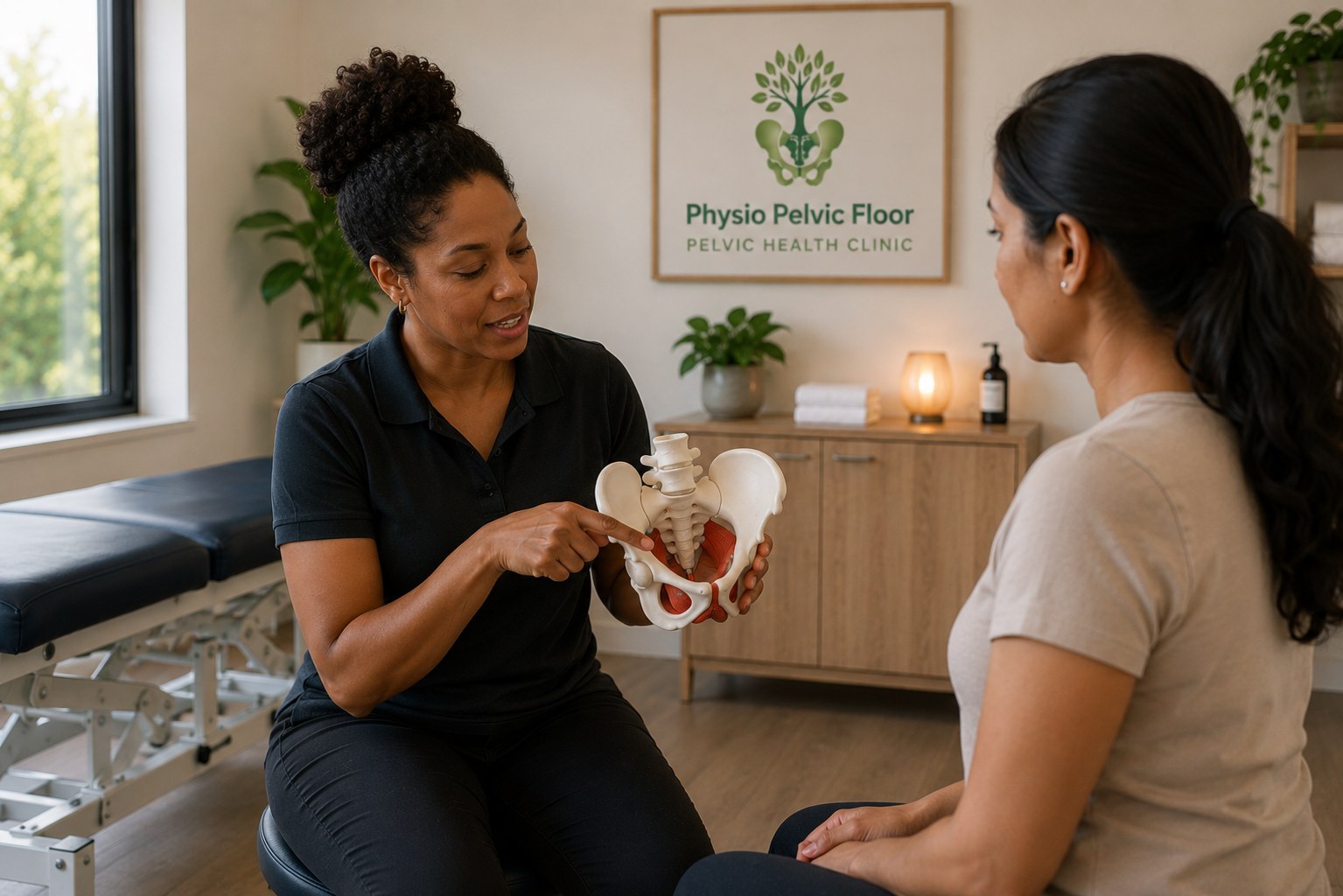
  • Muscle tightness (too tight), Overly contracted pelvic floor muscles cause pain with intercourse, urination, and bowel movements. Tightness often develops as a protective response to injury, surgery, or inflammation and can become a self-perpetuating cycle.
  • Hypotonicity (too weak), Insufficient support leads to abnormal load on pelvic nerves and organs, as well as the surrounding fascia and ligaments.
  • Coordination disorders, Incomplete relaxation during voiding or defecation creates pain, spasm, and a sensation of fullness or pressure.
  • Tight, tender spots in the pelvic muscles, Active trigger points in the main pelvic floor muscles, deep hip muscles, or a small muscle at your tailbone can refer pain, including discomfort in sitting, far from the pelvic floor itself.
Pelvic pain consultation

The brain-pelvic floor axis

Central nervous system regulation shapes how pain signals from the pelvis are processed and amplified. When the CNS becomes sensitized, a state called an over-sensitised nervous system, the threshold for pain drops, and stimuli that would not normally cause pain do so.

Sensitization is commonly seen in chronic pelvic pain and reflects a dysregulated nervous system rather than ongoing tissue damage. The good news is this can be reversed, pelvic floor physiotherapy exercises performed with a mindfulness approach can help reconnect the body and the mind and orchestrate more coordinated movement. This is why pain may persist long after a physical injury has healed, and why psychological mental/emotional health support is often a meaningful part of care.

Central Sensitization Inventory (CSI)

The CSI is a validated questionnaire used by clinicians to assess the degree of an over-sensitised nervous system. It asks about widespread pain, fatigue, sleep disturbance, and emotional distress. Higher scores suggest the nervous system is amplifying pain signals and guide treatment toward nervous system regulation alongside local pelvic floor work.

Autonomic and emotional contributions

Anxiety, trauma history, and emotional distress can increase pelvic floor muscle tension and lower the pain threshold. Addressing these through psychological mental health support, pacing, and nervous system regulation is often as important as the physical component of rehabilitation.

Assessment & treatment

How physiotherapy approaches pelvic pain

Assessment

A thorough subjective history explores pain quality, location, timing, triggers, and the impact on daily function and quality of life. Physical assessment may include posture, breathing patterns, hip mobility, external palpation around the pelvis and hips, and, with consent, internal assessment of pelvic floor tone, trigger points, and coordination.

Validated questionnaires such as the a sensitivity questionnaire, pain diaries, and bladder or bowel logs help build a complete picture.

Treatment approaches

  • Down-training and relaxation, for too tight or guarded pelvic floors, the priority is learning to release and lengthen rather than contract further.
  • Myofascial release, gentle manual therapy to release trigger points both internally and externally around the pelvis, hips, and lower abdomen.
  • Breathing and nervous system regulation, diaphragmatic breathing directly influences pelvic floor tone and can reduce overall nervous system arousal.
  • Graduated load, slowly re-exposing the body to feared movements and activities to reduce pain-avoidance responses.
  • Education, understanding the mechanisms of pain is itself a powerful intervention. Knowing that pain does not always mean tissue damage reduces fear and guarding.
  • Multidisciplinary care, complex chronic pelvic pain often benefits from collaboration between physiotherapy and other health care providers.
If you are experiencing new, severe, or unexplained pelvic pain, seek medical evaluation before starting physiotherapy. Some causes of pelvic pain require investigation before rehabilitation is appropriate.

Pelvic pain is rarely straightforward, and it responds best to accurate assessment. Our clinic specialises in exactly this. Book your assessment today, no referral required.

Clinic AssistantAsk us anything about our clinic or pelvic health.
Hi! I can help you explore general pelvic health topics.